Bubble Witch 2 Saga
- 4.6
- Rating
- 100.00M
- Installs
- Free
- Price
 Analysis by App-foxy
I first understood the appeal of Bubble Witch 2 Saga during a short break: aim, release a colored bubble, watch a small cluster fall, and immediately decide whether I had enough room for one more attempt. That simple sequence is the heart of King’s casual game. It is easy to begin, but the later decisions ask for more care than the bright presentation initially suggests.
This is a free bubble-shooting game for Everyone, available on devices running Android 6.0 or later. King released it on June 3, 2014, and the current version is 2.10.1.0. Its long life is reflected in a 4.6 average from around 2.9 million ratings, while more than 100 million installs show how widely the formula has traveled.
Why the first shot is more important than it looks
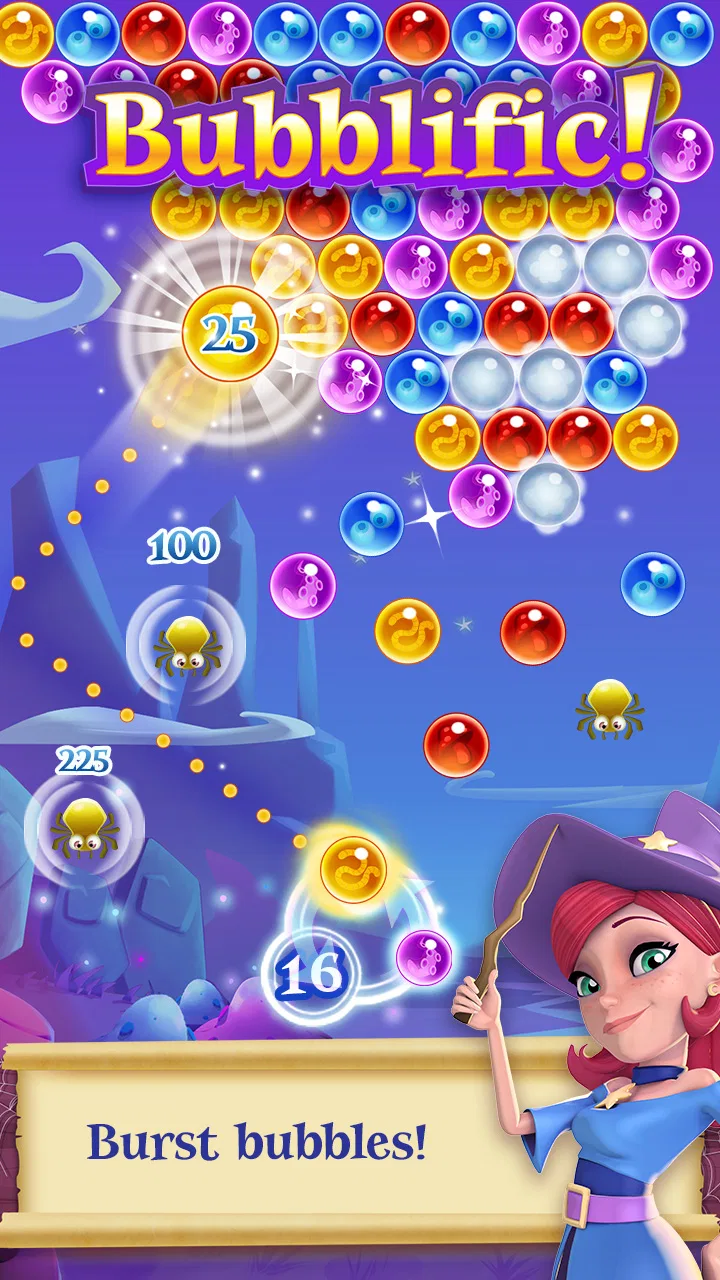
The opening action is familiar: I control a launcher near the bottom of the screen, choose an angle, and send a bubble toward matching colors above. The goal is not simply to fire as quickly as possible. I need to connect the shot with a suitable cluster, create a larger group, and use that connection to remove bubbles from the board.
You May Also Like

 AccuWeather: Weather Radar
AccuWeather Review: A Quick, Clear Forecast for Everyday Decisions
For everyday plans, the best forecast is the one you can understand quickly. AccuWeather makes rain timing, radar, and local conditions easy to act on, with a few trade-offs.

 Hill Climb Racing
Why Hill Climb Racing Still Turns Crashes Into One More Run
A tiny car, a bumpy hill and one more upgrade: Hill Climb Racing keeps resurfacing because its simple chaos makes every near-miss feel personal.

 AliExpress - Shopping App
AliExpress Makes Global Shopping Feel Personal, but Shoppers Bear the Risk
AliExpress turns a global marketplace into a pocket-sized discovery engine. Its reach is useful, its shopping loop compelling, and its trade-offs easy to miss.

 Lords Mobile: Kingdom Wars
Lords Mobile Is a Kingdom-Building Routine, Not a Quick Match
A case-by-case verdict on the building, battles, device demands, and social commitments that make Lords Mobile rewarding for some players and exhausting for others.

 PDF Scanner app - TapScanner
TapScanner Makes Paperwork Easier to Capture, Check, and Share
TapScanner makes scanning with a phone feel less like a rescue operation and more like a dependable step in getting work done. Its capture tools are useful, though not flawless.

 Block Blast!
 Shows How Much a Puzzle Game Can Leave Out
A quiet grid game shows why puzzle players increasingly value instant clarity, repeatable skill and low-pressure play—and where the genre still needs to catch up.
More From Our News Desk
View All News


That distinction gives the game its personality. A careless shot may attach to an unhelpful place and make the next move awkward. A well-aimed shot can clear a supporting group and bring several bubbles down at once. The immediate action is small, but the board gives enough visual information to make each decision feel deliberate rather than random.
I particularly like using the sides of the play area when a direct route is blocked. A bubble can travel toward a wall and bounce into a difficult gap, which turns the screen into a basic geometry puzzle. This is one of the first useful skills to practice: before firing, I look for the final contact point rather than staring only at the target cluster. The bounce angle often matters more than the straight line.
The game works well for people who want something understandable without a long tutorial. A new player can learn the central action almost immediately, yet aiming around obstacles creates a small learning curve. That makes it more satisfying than a purely automatic matching game, because my input has a visible effect on what becomes possible next.
The feedback rhythm keeps the board readable
Every shot produces a clear response. A successful match disappears, unsupported bubbles drop, and the open space changes the next decision. Even when I miss the ideal target, the result is easy to read. I can see which colors remain, where the launcher is pointing, and how much of the board is still blocking a useful route.
That feedback rhythm is the strongest part of the design. Action leads to a visible change, the change suggests a new opportunity, and the next shot arrives before the previous one feels forgotten. The game rarely asks me to wait through a complicated result. It keeps the important information on the screen and makes the consequence of a poor angle obvious.
There is also a pleasing difference between a normal match and a larger clearance. Removing a few bubbles feels useful, but dropping a hanging section gives the shot a stronger sense of reward. I find myself planning around support points: instead of chasing the nearest color, I sometimes aim at the group holding an entire section in place. That is a more advanced way to play, and it saves shots when the board becomes crowded.
My practical advice is to pause briefly before every shot, especially when a color appears in several places. The most visible match is not always the best one. A lower group may offer an easy connection, while a higher group may be the key to opening the whole board. Looking for the shot that changes the structure of the level is usually more valuable than choosing the shot that removes the most obvious bubbles.
The color sequence also affects how confidently I plan. If the next available bubble does not fit the move I wanted, I avoid forcing it into a bad position. Instead, I use it to create a safer setup or clear a small obstruction. This is a subtle trade-off: spending a shot to improve the board can feel inefficient, but leaving a badly placed bubble may make several later shots worse.
Small rewards make ordinary clears feel worthwhile
The reward is not limited to finishing a level. The game gives frequent visual confirmation when a match works, and larger collapses make progress feel more substantial. That matters in a casual title because the player needs a reason to care about one more shot even when the overall challenge is modest.
I enjoy the way a successful chain changes my mood from cautious to confident. After opening a route, I can see possibilities that were hidden a moment earlier. The reward is therefore partly strategic: clearing bubbles does not just improve a score or empty the board; it gives me more useful space and better angles.
This makes the game a good fit for short, repeatable play sessions. I can use it while waiting for an appointment or winding down after work without needing to remember a complicated story. The action starts quickly, the result arrives quickly, and the game does not demand that I build a large mental model before having fun.
At the same time, players who want deep character development, a long narrative, or a competitive action system may find the rewards too narrow. The satisfaction comes from solving the current board, not from exploring a rich world. It is better understood as a focused puzzle routine than as a broad adventure.
The free entry point is helpful, but I would keep an eye on the in-app purchase structure. Optional items range from $0.99 to $159.99 per item. That wide range does not change the basic appeal of aiming and matching, but it does mean I would recommend setting a purchase limit before handing the game to a child or using it as a frequent daily distraction. The Everyone rating describes the audience suitability, not a promise that every player will want the optional spending.
Why a failed level still invites another attempt
When a level goes badly, the reset is fast enough to preserve the lesson. I can identify the mistake—perhaps I used a useful color too early, ignored a support group, or created an awkward ceiling—and then try again with a clearer plan. That is a strong loop for casual play: the failure is inconvenient, but it does not feel like a major loss of time.
The reset also prevents the board from becoming emotionally heavy. A difficult attempt does not require me to replay a long story section or rebuild a complicated setup. I return to the central question: where should the next bubble go? For me, that makes the game easy to resume after a day away, because the skill is visual and practical rather than dependent on remembering plot details.
Still, the same simplicity can become repetitive. The basic action remains the same throughout the experience, so players who need constant mechanical variety may eventually want something more demanding. I would not choose this as my only game if I were looking for evolving systems or a large range of play styles. Its strength is consistency, and consistency can feel predictable when I play for too long.
I get better results by treating each attempt as a compact puzzle rather than rushing through it. On a first try, I inspect how the colors are arranged and notice which sections appear to depend on others. On a second attempt, I prioritize the structural weakness I discovered. This two-pass approach is more effective than simply firing faster, and it turns a loss into useful information.
Another helpful habit is to preserve flexibility. If I can choose between clearing a small group immediately and opening a wider route, I usually prefer the route unless the board is close to completion. Space creates options, while a quick small match can sometimes leave the remaining bubbles packed into an awkward shape. That decision is not universal, but it is a reliable rule when I am unsure.
How it compares with other casual choices
Compared with a standard match-three game, this title places more responsibility on aiming and trajectory. I am not only selecting adjacent pieces; I am deciding how a moving bubble reaches its destination and whether the connection will remove support beneath other bubbles. That gives the game a more physical feel, even though the rules remain accessible.
Compared with an endless runner, it is slower and more thoughtful. There is no need to react continuously to a moving character or memorize a long sequence of controls. The pressure comes from limited opportunities on the board and from the consequences of a poor placement. I would choose it over a runner when I want a quiet break, but not when I want constant motion.
Compared with a purely relaxing color-matching app, it offers more room for planning because bank shots and structural clears matter. The trade-off is that it can be less soothing when a board becomes crowded or a carefully prepared shot fails. Players who want zero friction may prefer a simpler matching experience, while players who enjoy small tactical decisions will probably appreciate this extra layer.
Its age is worth considering in a practical way. The game has been available since 2014, and the current version remains compatible with Android 6.0 or later. That broad compatibility is useful for people with older supported devices, although I would still keep the app updated through the normal store process and make sure the phone has enough free space for comfortable use. The important point is that this is an established casual formula, not a game built around chasing the newest hardware.
Who will enjoy it, and who should skip it
I recommend it to anyone who likes short puzzle sessions, visual feedback, and a challenge that grows from simple rules. It is especially suitable for players who enjoy learning through repetition: aim once, see the result, adjust, and try again. The controls are approachable enough for a beginner, while careful use of angles and support points gives experienced players something to refine.
It also suits a realistic everyday routine. If I have ten minutes before leaving home, I can complete a few attempts without committing to a long narrative session. If I lose, I can stop without feeling that I abandoned a complicated campaign. If I succeed, the clear board gives me a natural stopping point—or an easy reason to continue.
I would skip it if I dislike repeated level-based play, dislike optional purchases, or expect a game to keep introducing major new mechanics. I would also look elsewhere if my priority is an offline-first experience, a story-heavy campaign, or direct competition with other players. The appeal here is the focused bubble-shooting loop, and that focus will not suit everyone.
Families should also think about how the game will be used. The age rating is Everyone, which makes the presentation broadly accessible, but the purchase range means I would use device-level purchase controls and discuss spending before allowing unsupervised play. That is not a criticism of the aiming mechanic; it is simply sensible preparation for a free game with optional paid items.
The loop verdict: clear, restart, repeat
My final impression is that the game succeeds because its loop is easy to feel. I take one action, receive immediate visual feedback, gain either progress or a useful lesson, and then decide whether to reset the board or continue. The reason another session begins is not complicated: I can usually see how one different angle or one better target might change the outcome.
King’s game is at its best when I play thoughtfully rather than rapidly. The most rewarding moments come from opening a route, dropping a supported group, and watching a difficult board become manageable through one well-planned shot. Those moments give the simple format enough depth to remain engaging during short breaks.
It is not a perfect choice for players seeking variety, story, or a completely pressure-free experience. The repeated structure can wear thin, and optional purchases deserve attention. Even so, as a free casual game with accessible controls, readable feedback, and a satisfying reset cycle, it remains an easy recommendation for anyone who enjoys compact aiming puzzles. If you like seeing one careful move reshape the entire board, this is a strong pick for your next short gaming session.
FAQs for Bubble Witch 2 Saga
01What is the objective of Bubble Witch 2 Saga?
Bubble Witch 2 Saga is a bubble-shooting puzzle game where players aim to clear the screen of bubbles by matching three or more of the same color. The objective is to help Stella and her cats free the land from dark spirits by completing levels and progressing through the game's enchanting story.
02Is Bubble Witch 2 Saga free to play?
Yes, Bubble Witch 2 Saga is free to download and play. However, the game offers optional in-app purchases for items like extra lives, boosters, or special bubbles. These purchases can enhance gameplay but are not necessary to progress. Players can also disable in-app purchases in their device settings.
03What platforms is Bubble Witch 2 Saga available on?
Bubble Witch 2 Saga is available for download on both Android and iOS devices. It can be found in the Google Play Store for Android users and the App Store for iOS users. The game requires an internet connection for certain features and updates, ensuring a seamless gaming experience.
04Can I play Bubble Witch 2 Saga offline?
While you can play many levels offline, some features of Bubble Witch 2 Saga, like leaderboards, events, and syncing progress across devices, require an internet connection. Playing online also ensures that you receive the latest updates and can participate in special events and challenges.
05How do I save my progress in Bubble Witch 2 Saga?
To save your progress, connect Bubble Witch 2 Saga to your Facebook account. This allows you to sync your game across multiple devices and ensures that your progress is saved even if you switch devices or reinstall the app. Without this connection, progress is saved only locally on your device.
Pros
- Engaging puzzles and levels.
- Colorful and vibrant graphics.
- Smooth and intuitive controls.
- Regular updates and events.
- Free to play with optional purchases.
Cons
- In-app purchases can be costly.
- Requires internet for full features.
- Ads may interrupt gameplay.
- Limited lives can hinder progress.
- Some levels feel repetitive.

Bubble Witch 2 Saga
Gallery